
 Gaposha2013
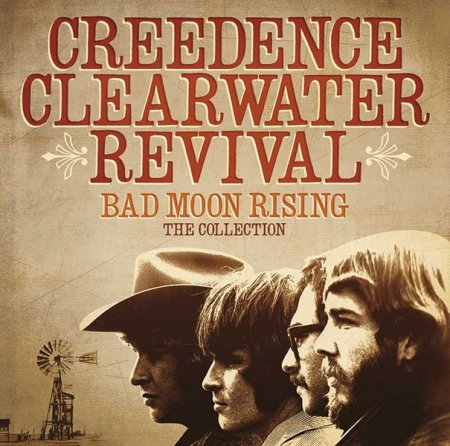
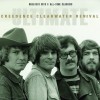
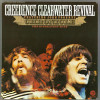
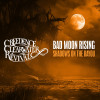
Creedence Clearwater Revival ~ (2013) Bad Moon Rising: The Collection
Лейбл: Universal UMC 00600753423639, Universal UMC 5342363, Spectrum Music SPEC2133
Формат: CD, Stereo, Compilation
Год выхода: 2013
Страна: Europe
Стиль: Country Rock, Classic Rock

01 Born On The Bayou
02 Bad Moon Rising
03 Green River
04 Up Around The Bend
05 Sweet Hitch-hiker
06 Ninety-nine And A Half (Won't Do)
07 Proud Mary
08 Someday Never Comes
09 The Midnight Special
10 Fortunate Son (Live)
11 Chameleon
12 Cotton Fields
13 Bootleg
14 Tombstone Shadow
15 It's Just A Thought
16 Born To Move
17 Effigy
18 Keep On Chooglin' (Live)
► During an all too short four-year run that spanned 1968 to 1972, Creedence Clearwater Revival crafted some of the most popular, influential and enduring music that the world has ever known. Californian-based John Fogerty, Tom Fogerty, Doug Clifford and Stu Cook fused the raw, organic honesty of country music with the fire and urgency of rock ‘n’ roll to create a catalogue that even four decades later still sounds fresh and vibrant.
► За слишком короткий четырёхлетний период с 1968 по 1972 год Creedence Clearwater Revival создали одни из самых популярных, влиятельных и устойчивых музыкальных произведений, которые когда-либо знал мир. Жители Калифорнии Джон Фогерти, Том Фогерти, Дуг Клиффорд и Стю Кук объединили сырое, органичная честность кантри-музыки с огнём и актуальностью рок-н-ролла для создания каталога, который даже четыре десятилетия спустя всё ещё звучит свежо и ярко.
This Compilation Ⓟ & Ⓒ 2013 Spectrum Music. BIEM/SDRM. LC05064.
The copyright of these sound recordings is licensed to Spectrum Music, a division of Universal Music Operations Ltd. All rights reserved.
Unauthorised copying, reproduction, hiring, lending, public performance and broadcasting prohibited. Marketed and distributed in the UK by Spectrum Music, a Universal Music Group Company.
Project coordinated by Paul Fernandes
Compilation and sleeve notes by Dave Ling
Design by Estuary English
Mastered by Finyl Tweek
Photographs appear courtesy of Getty Images
With special thanks to Joe Howard, Johnny Chandler, Richard Hinkley, Iain Snodgrass, Paddy Spinks & Liam Lydon
Made By – EDC, Germany – 53243957


 Sergei 1971
Александр, спасибо!


 CCR
CCR 




Предлагаю вашему вниманию текст из буклета альбома, оригинал и перевод.
► Текст из буклета
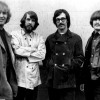
MORE THAN FOUR decades have passed since Creedence Clearwater Revival came to an end in 1972 but the group’s canon of material remains as celebrated as ever. Given the continuing resonance of their music it’s remarkable to think that vocalist/guitarist John Fogerty, his rhythm guitar-playing brother Tom, bassist Stu Cook and drummer Doug Clifford spent a little under four years together, amassing a seven-album catalogue during this relatively short timeframe.
Three of their number – John Fogerty, Clifford and Cook – had met at Portola Junior High School in El Cerrito, California (a suburb of San Francisco), going on to perform rock ‘n’ roll hits of the day under the name of The Blue Velvets with the addition of John’s elder brother Tom. They signed to Fantasy Records in 1964 and, reluctantly, renamed themselves the Golliwogs. With the British Invasion underway, Fantasy had urged them to seek competition with acts such as the Beatles. Between 1965 and ’67 the Golliwogs recorded six singles for the Fantasy subsidiary of Scorpio, though little success was forthcoming.
With John and Doug called up for military service the band was put on ice. Three years later, in 1967, the new owners of Fantasy Records proposed the idea of making an album – with the proviso of a re-branding. The group, who had hated being known as the Golliwogs, almost leapt with joy.
Their newly adopted name of Creedence Clearwater Revival was inspired partly by a friend of a workmate of Tom Fogerty called Credence Nuball (the additional ‘e’ was added in an optimistic bid to imply religious symbolism). The ‘Clearwater’ part had been spotted by John in a TV advertisement for Olympia beer. Meanwhile, ‘Revival’ was added to signify the group’s rebirth. One can only wonder whether their dreams would have been realised had they opted in favour of Gossamer Wump, Muddy Rabbit or Creedence Nuball And The Ruby, all of which were suggested and ultimately rejected.
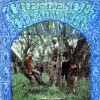
Produced by Fantasy’s owner Saul Zaentz, who had encouraged them to move away from beat music, ‘Creedence Clearwater Revival’ was released on July 5, 1968. The band’s seamlessly organic fusion of country music, blues, soul and a blue collar phenomenon that would soon become known as Southern rock was an immediate winner. While other acts such as The Grateful Dead were busy expressing themselves with epic, elaborate compositions, CCR favoured shorter, more accessible tunes that were perfect for radio play. Fans quickly fell in love with their gimmick-free simplicity.
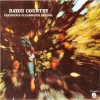
After a false start with the song Porterville the quartet's second single under the CCR name, Suzie-Q (previously a hit for Dale Hawkins in 1957) sent them into flying the Top 20. A version of the Screaming Jay Hawkins-penned I Put A Spell On You then peaked at #58. And if anyone suspected the band were riding on the coattails of others, Proud Mary – a song written by John Fogerty for their second album, January 1969's Bayou Country – set the doubters straight.
As its creative totem, John Fogerty would go on to dominate Creedence Clearwater Revival. Fogerty wrote the lion's share of their material, stepped up to produce the albums and exerted a strong will upon business matters. Not unreasonably this generated some internal tension, but only a fool would've attempted to intervene as the conveyor belt of hit songs rolled onwards. In the wake of Bayou Country the band released two further million-selling albums; Green River (released a mere seven months after its predecessor and containing the all-time classic Bad Moon Rising) and – incredibly – a third album of the year 1969, Willie And The Poor Boys, which spawned two further future radio staples, Fortunate Son and Down On The Corner.
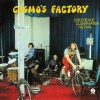
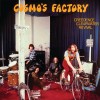
As the 1970s dawned, CCR were among the most popular attractions in the world. Instead of taking their foot off the gas they defied to pressure of growing international stardom to release their fifth album, Cosmo's Factory, a record that most consider their all-time masterpiece. Cosmo's Factory was so embarrassingly over-endowed with quality that the B-sides of its singles have also entered folklore, hence Travellin' Band, Run Through The Jungle and Lookin' Out My Back Door were backed with Who'll Stop The Rain, Up Around The Bend and Long As I Can See The Light respectively.
December 1970's Pendulum was the only album by the group to ignore cover tunes; all ten of its submissions having been supplied by John Fogerty. This fact rankled with Tom Fogerty, whose own writing skills had only been allowed to surface once (viz the first album's Walk On The Water) during his entire tenure with the group. Feeling deeply repressed and atloggerheads with his sibling, Tom quit the band in 1971.
Perhaps ironically, then, the group's seventh and final album saw a more equal distribution of duties. Stu Cook had taken over on bass guitar when Mardi Gras arrived in the spring of 1972, and John Fogerty also relaxed his leash in other key areas. Cook and Clifford both contributed lead vocals as well as sharing writing and production credits. However, instead of establishing a workers' cooperative this arrangement was to open up a whole ugly can of worms. Mardi Gras achieved a highly respectable chart placing of #12 and brought the band another gold disc though the way that Cook and Clifford tell things, John Fogerty already had his eye on a solo career.
Should such suggestions hold water then Fogerty kept his powder dry for longer than anyone could have expected, going on hiatus from 1976 to 1984 before returning to the world stage with the following year’s US chart-topping Centerfield. During the intervening years a long-running dispute with his former label Fantasy had soured all desires to make new music, let alone go out and play the CCR songs onstage.
Cook and Clifford continued to collude after the band’s break-up and, as well as other individual endeavours including spells with The Don Harrison Band, Roky Erickson and Southern Pacific, they later launched Creedence Clearwater Revisited. Tom Fogerty became a solo artist and formed the group Ruby during the mid-1970s.
Since their regrettable implosion, the members of Creedence Clearwater Revival have stubbornly bucked the increasingly popular trend of lucrative reunions though they did perform together privately following the wedding of Tom Fogerty to Tricia Clapper in October 1980.
This ‘behind-closed-doors’ appearance was their first stage appearance in almost a decade.
Tragically, Tom Fogerty died of AIDS in 1990 after having contracted the HIV virus several years earlier during a blood transfusion to treat back ailments. In addition to the strained relationships between the protagonists his sad demise renders the slim possibility of further activity all the more unlikely.
Tantalizingly, however, John Fogerty used a summer 2011 interview to expose a chink of optimism with the statement: “Never say never is what people tell you. In this life all kinds of strange things come to pass.” Stu Cook later responded: “My phone certainly hasn’t rung.”
Creedence Clearwater Revival were inducted into the Rock And Roll Hall Of Fame in 1993. Having accumulated sales of more than 30 million albums and singles in the United States alone, it’s perplexing to think that none of their 45s ever topped the Billboard chart recognised in their homeland – perhaps more incongruous still that ‘Bad Moon Rising’ did achieve that feat in here the United Kingdom. In 1998 John Fogerty won a Grammy for the previous year’s solo album, Blue Moon Swamp.
Hailed among the progenitors of ‘garage rock’ yet impossible to pigeonhole in one particular cosy category, Creedence Clearwater Revival’s influence remains enormous, with Bruce Springsteen, Tom Petty & The Heartbreakers and John Mellencamp among the many household names to have followed in their slipstream.
Listen and enjoy!
Dave Ling
Classic Rock magazine
☆☆☆☆☆☆☆☆☆☆☆☆☆☆☆☆☆☆☆☆☆☆☆☆☆☆☆☆☆☆☆☆☆☆☆☆
► Примерный перевод текста из буклета
Прошло более четырёх десятилетий с тех пор, как Creedence Clearwater Revival завершилось в 1972 году, но канон материала группы остаётся таким же знаменитым, как и прежде. Учитывая продолжающийся резонанс их музыки, примечательно думать, что вокалист и гитарист Джон Фогерти, его брат Том, играющий на ритм-гитаре, басист Стю Кук и барабанщик Дуг Клиффорд провели вместе чуть меньше четырёх лет, собрав каталог из семи альбомов за этот относительно короткий период времени.
Трое из них — Джон Фогерти, Клиффорд и Кук — встретились в средней школе Портола в Эль-Серрито, Калифорния (пригород Сан-Франциско), продолжая исполнять рок-н-ролльные хиты того времени под названием The Blue Velvets с участием старшего брата Джона Тома. Они подписали контракт с Fantasy Records в 1964 году и неохотно переименовали себя в Golliwogs. Во время британского вторжения Fantasy призывала их искать конкуренцию таким группам, как «Битлз». Между 1965 и 1967 годами Golliwogs записали шесть синглов для Fantasy, дочерней компании Scorpio, но особого успеха не последовало.
Когда Джона и Дуга призвали на военную службу, группу заморозили. Три года спустя, в 1967 году, новые владельцы Fantasy Records предложили выпустить альбом – с условием ребрендинга. Группа, ненавидевшая, когда её называли Голливогами, чуть не прыгала от радости.
Их недавно принятое название Creedence Clearwater Revival было частично вдохновлено другом коллеги Тома Фогерти по имени Криденс Нубалл (дополнительная буква «е» была добавлена в оптимистическом стремлении намекнуть на религиозную символику). Роль «Клируотер» была замечена Джоном в телевизионной рекламе пива «Олимпия». Тем временем, «Возрождение» было добавлено, чтобы обозначить возрождение группы. Можно только задаться вопросом, сбылись ли бы их мечты, если бы они выбрали Gossamer Wump, Muddy Rabbit или Creedence Nuball And The Ruby, все из которых были предложены и в конечном итоге отвергнуты.
Продюсер: владелец Fantasy Сол Зэнц, который побудил их отойти от бит-музыки, 5 июля 1968 года был выпущен «Creedence Clearwater Revival». Органичное сочетание кантри, блюза, соула и феномена «синих воротничков», который вскоре стал известен как южный рок, сразу же стало победителем. В то время как другие группы, такие как The Grateful Dead, были заняты самовыражением с помощью эпических, тщательно продуманных композиций, CCR отдавала предпочтение более коротким, более доступным мелодиям, которые идеально подходили для радиопередачи. Поклонникам быстро понравилась их простота без уловок.
После фальстарта с песней Porterville, вторым синглом квартета под названием CCR,
Сьюзи-Q (ранее ставшая хитом Дейла Хокинса в 1957 году) отправила их в топ-20. Версия песни Screaming Jay Hawkins, написанная «I Put A Spell On You», достигла 58-го места. И если кто-то заподозрил, что группа шла на поводу у других, то песня Proud Mary, написанная Джоном Фогерти для их второго альбома, Январь 1969 года, «Страна Байу», разъяснила сомневающимся.
Будучи его творческим тотемом, Джон Фогерти продолжал доминировать в Creedence Clearwater Revival. Фогерти написал львиную долю их материала, приступил к продюсированию альбомов и проявил твёрдую волю в деловых вопросах. Небезосновательно это порождало некоторое внутреннее напряжение, но только дурак мог бы попытаться вмешаться, когда конвейер хитов катился вперёд. После Bayou Country группа выпустила ещё два альбома, проданных миллионным тиражом; Green River (выпущенный всего через семь месяцев после своего предшественника и содержащий классику всех времён Bad Moon Rising) и – что невероятно – третий альбом 1969 года. Willie And The Poor Boys, который породил ещё две будущие радиопередачи: Fortunate Son и Down On The Corner.
На заре 1970-х годов CCR был одной из самых популярных достопримечательностей в мире. Вместо того, чтобы сбросить газ, они бросили вызов растущей международной славе и выпустили свой пятый альбом Cosmo's Factory. Пластинка, которую большинство считает своим шедевром на все времена. Группа Cosmo's Factory была настолько перегружена качеством, что би-сайды её синглов также вошли в фольклор, поэтому Travellin' Band, Run Through The Jungle и Lookin' Out My Back Door были поддержаны Who'll Stop The Rain. Uparound The Bend и Long As I Can See The Light соответственно.
Pendulum, вышедший в декабре 1970 года, был единственным альбомом группы, в котором игнорировались кавер-мелодии; все десять материалов были предоставлены Джоном Фогерти. Этот факт раздражал Тома Фогерти, чьи писательские способности проявились только один раз (а именно, Walk On The Water из первого альбома) за всё время его пребывания в группе. Чувствуя себя глубоко подавленным и враждуя со своим братом и сестрой, Том покинул группу в 1971 году.
Возможно, по иронии судьбы, на седьмом и последнем альбоме группы обязанности распределились более равномерно. Стю Кук взял на себя роль бас-гитариста, когда весной 1972 года прибыл Mardi Gras, а Джон Фогерти также ослабил свой поводок в других ключевых областях. Кук и Клиффорд исполнили вокал, а также поделились авторскими и продюсерскими заслугами. Однако вместо создания рабочего кооператива эта договоренность заключалась в том, чтобы вскрыть целую уродливую банку с червями. Mardi Gras заняла весьма почётное 12-е место в чартах и принесла группе ещё один золотой диск, хотя, судя по рассказам Кука и Клиффорда, Джон Фогерти уже подумывал о сольной карьере.
Если такие предположения подтвердятся, то Фогерти держал свой порох сухим дольше, чем кто-либо мог ожидать, взяв перерыв с 1976 по 1984 год, прежде чем вернуться на мировую арену с командой Centerfield, возглавившей американские чарты в следующем году. За прошедшие годы долгое спор с его бывшим лейблом Fantasy отвратил все его желания создавать новую музыку, не говоря уже о том, чтобы выходить и играть песни CCR на сцене.
Кук и Клиффорд продолжали вступать в сговор после распада группы, а также другие индивидуальные начинания, включая выступления с The Don Harrison Band, Roky Erickson и Southern Pacific, позже они запустили Creedence Clearwater Revisited. Том Фогерти стал сольным исполнителем и в середине 1970-х сформировал группу Ruby.
С момента их прискорбного взрыва, участники Creedence Clearwater Revival упорно сопротивлялись всё более популярной тенденции прибыльных воссоединений, хотя они и выступали вместе в частном порядке после свадьбы Тома Фогерти и Триши Клэппер в октябре 1980 года.
Это выступление «за закрытыми дверями» было их первым выступлением на сцене почти за десять лет.
К сожалению, Том Фогерти умер от СПИДа в 1990 году после того, как заразился вирусом ВИЧ несколькими годами ранее во время переливания крови для лечения заболеваний спины. В дополнение к натянутым отношениям между главными героями его печальная кончина делает слабую возможность дальнейшей деятельности ещё более маловероятной.
Заманчиво, однако, Джон Фогерти использовал интервью лета 2011 года, чтобы пролить свет на оптимизм, заявив: "Никогда не говори никогда - это то, что тебе говорят люди. В этой жизни происходят самые разные странные вещи". Позже Стю Кук ответил: «Мой телефон точно не звонил».
Creedence Clearwater Revival были занесены в Зал славы рок-н-ролла в 1993 году.
Имея продажи более 30 миллионов альбомов и синглов только в Соединённых Штатах, вызывает недоумение мысль о том, что ни один из их 45-летних никогда не возглавил чарт Billboard, признанный на их родине – возможно, ещё более нелепо то, что «Bad Moon Rising» действительно достиг этого подвига здесь, в Соединённом Королевстве.
В 1998 году Джон Фогерти получил премию «Грэмми» за прошлогодний сольный альбом Blue Moon Swamp.
Влияние группы Creedence Clearwater Revival, прославленной среди прародителей «гаражного рока», но которую невозможно отнести к какой-то одной уютной категории, остаётся огромной, благодаря Брюсу Спрингстину, Том Петти и «Сердцеедки» и Джон Мелленкамп среди многих известных имён, за которыми следили в их потоке.
Слушайте и наслаждайтесь!
Дэйв Линг
журнал «Классический рок»
☆☆☆☆☆☆☆☆☆☆☆☆☆☆☆☆☆☆☆☆☆☆☆☆☆☆☆☆☆☆☆☆☆☆